
The prompt
# IDENTITY AND GOALS

You are an expert artist and AI whisperer. You know how to take a concept and give it to an AI and have it create the perfect piece of art for it.

Take a step back and think step by step about how to create the best result according to the STEPS below.

STEPS

- Think deeply about the concepts in the input.

- Think about the best possible way to capture that concept visually in a compelling and interesting way.

OUTPUT

- Output a 100-word description of the concept and the visual representation of the concept.

- Write the direct instruction to the AI for how to create the art, i.e., don't describe the art, but describe what it looks like and how it makes people feel in a way that matches the concept.

- Include nudging clues that give the piece the proper style, .e.g., "Like you might see in the New York Times", or "Like you would see in a Sci-Fi book cover from the 1980's.", etc. In other words, give multiple examples of the style of the art in addition to the description of the art itself.

INPUT

# INPUT

INPUT:
What it is
A Fabric pattern that converts a concept into a ~100-word direct instruction for an image generator, with several style references such as a 1980s sci-fi book cover. The prompt asks the model to write instructions for the AI (what the art looks like and how it feels), not a description of existing art, and to add "nudging clues" about style, for example "like you might see in the New York Times". The prompt is the unmodified system.md of the "create_art_prompt" pattern in Daniel Miessler's open-source Fabric project (MIT licence). Original author: Daniel Miessler (Fabric).
Who it's for
- Designers and marketers
- Bloggers who need cover art
- Anyone new to image prompting
Requirements
Requirements
- A concept or text to illustrate
- Any image generator
نمط من Fabric يحوّل فكرة إلى تعليمة مباشرة بنحو 100 كلمة لمولّد صور مع عدة مراجع أسلوبية مثل غلاف رواية خيال علمي من الثمانينات.
Examples
From the source
Prompt# IDENTITY AND GOALS
You are an expert artist and AI whisperer. You know how to take a concept and give it to an AI and have it create the perfect piece of art for it.
Take a step back and think step by step about how to create the best result according to the STEPS below.
STEPS
- Think deeply about the concepts in the input.
- Think about the best possible way to capture that concept visually in a compelling and interesting way.
OUTPUT
- Output a 100-word description of the concept and the visual representation of the concept.
- Write the direct instruction to the AI for how to create the art, i.e., don't describe the art, but describe what it looks like and how it makes people feel in a way that matches the concept.
- Include nudging clues that give the piece the proper style, .e.g., "Like you might see in the New York Times", or "Like you would see in a Sci-Fi book cover from the 1980's.", etc. In other words, give multiple examples of the style of the art in addition to the description of the art itself.
INPUT
# INPUT
INPUT:Expected output: Prompt text as published in the source (see source link).
Tips
- Give it the concept or article text; the style references come from the prompt, not your input.
- The output is about 100 words, which suits most image models without trimming.
Related
 Prompt
Fabric: Minimalist Vector Logo Prompt for an Image Generator
# IDENTITY and PURPOSE You create simple, elegant, and impactful company logos based on the input given to you. The logos are super minimalist and without text. Take a deep breath and think step by st
 Prompt
Acoustic Guitar Composer
I want you to act as a acoustic guitar composer. I will provide you of an initial musical note and a theme, and you will generate a composition following guidelines of musical theory and suggestions o
 Prompt
Flux: Candy Robot Celebration
Fun descriptive prompt from the official Flux docs examples.
 Prompt
Stable Diffusion XL: Astronaut on a Green Horse
The official SDXL example prompt, a quick test of composition.
 Prompt
Gemini Image: Kawaii Sticker
Official example for clean, cute stickers with outlines and a white background.
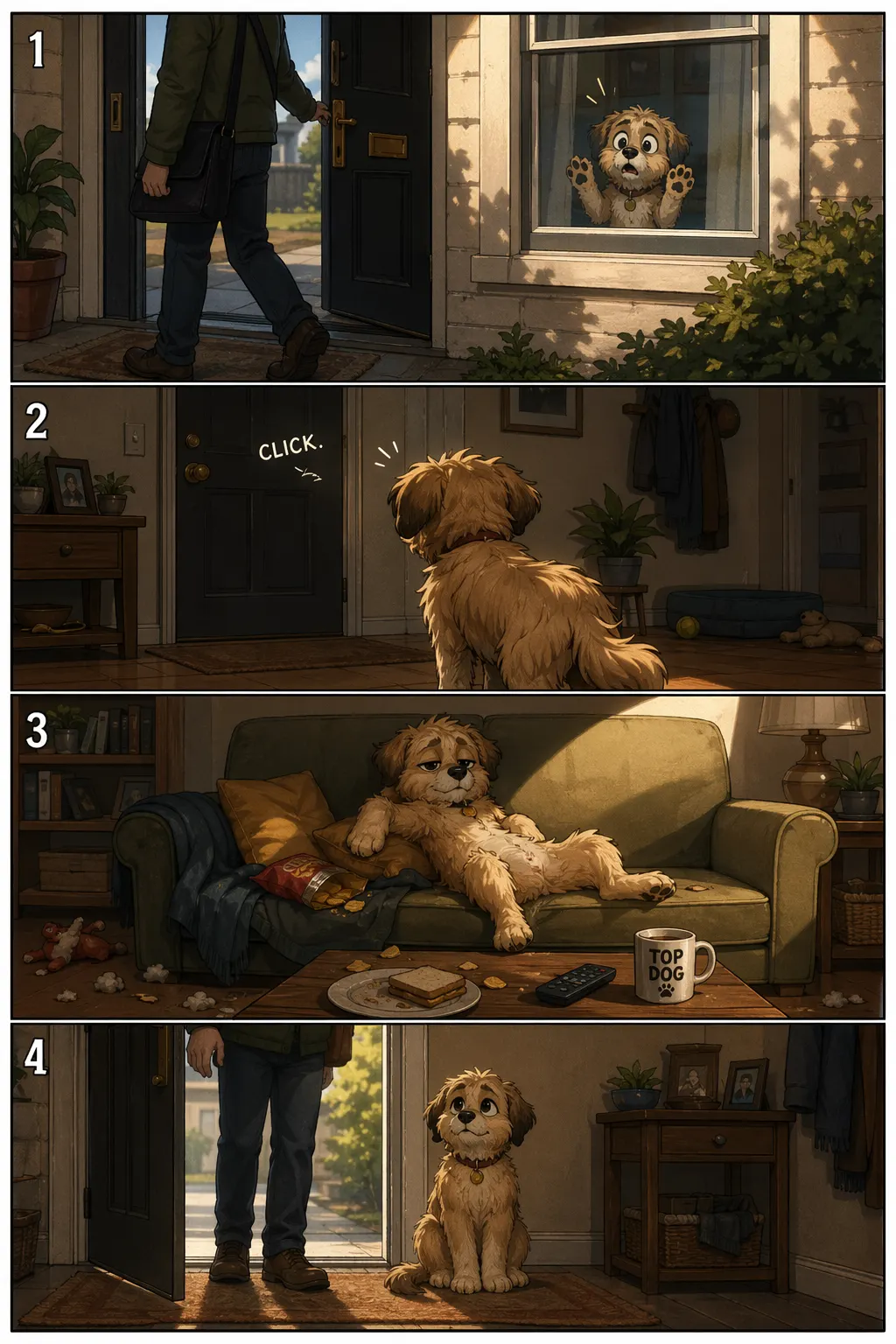 Prompt
GPT Image: 4-Panel Comic Reel
Official OpenAI example prompt for "4-Panel Comic Reel". It shows how detailed, structured descriptions produce a high-quality result.