
What it is
Every Google account comes with 15 GB of free storage, but with several accounts the space is split and one always fills up first. 9Drive connects your Google Drive accounts (and any S3-compatible bucket such as AWS S3, Cloudflare R2, MinIO, Wasabi or Backblaze B2) and shows the combined quota on one dashboard. Uploads are streamed through your own backend to an account that has room, using the rule you choose: most available space, round-robin, or your own priority order. On top of that it is a normal file manager: nested virtual folders, search with filters, previews for images, video, PDF and Office files, public share links, invites for viewers or editors, an activity log and an API-key upload endpoint. Per the README, files stream straight through to your storage and nothing is written to the server's disk.
Who it's for
- People who hold several free Google accounts and want their space to behave like one drive
- Self-hosters who also want S3-compatible storage (R2, MinIO, B2) in the same dashboard
- Developers who need an upload API with API keys for scripts or CI
Requirements
Requirements
- Self-hosting: Node.js 20+ and MySQL 8+ (per the README badges)
- Or Docker, with MySQL included in the compose file
- Google OAuth credentials to connect Drive accounts (set in Settings, or in .env)
Setup
Clone the repository
The README recommends Docker as the easiest option. You only need Docker; MySQL is included.
bashgit clone https://github.com/zenhosta/9drive.git cd 9driveCreate your .env and set the secrets
Copy the Docker example file, then open .env and set JWT_ACCESS_SECRET and TOKEN_ENCRYPTION_KEY to long random strings.
bashcp .env.docker.example .envStart it
Then open http://localhost:5173 and create an account. The backend runs the database migrations on every start, so updating keeps your data. Google credentials can be added later in Settings.
bashdocker compose up -d --build
Pros & cons
Pros
- Pro:Apache-2.0 licence, self-hosted, files are not stored on the server disk
- Pro:Choice of upload routing: most space, round-robin or priority order
- Pro:Also supports S3-compatible storage, plus sharing, invites and an upload API
Cons
- Con:Self-hosting needs Node.js 20+ and MySQL 8+ (or Docker)
- Con:You must create Google OAuth credentials to connect Drive accounts
Related
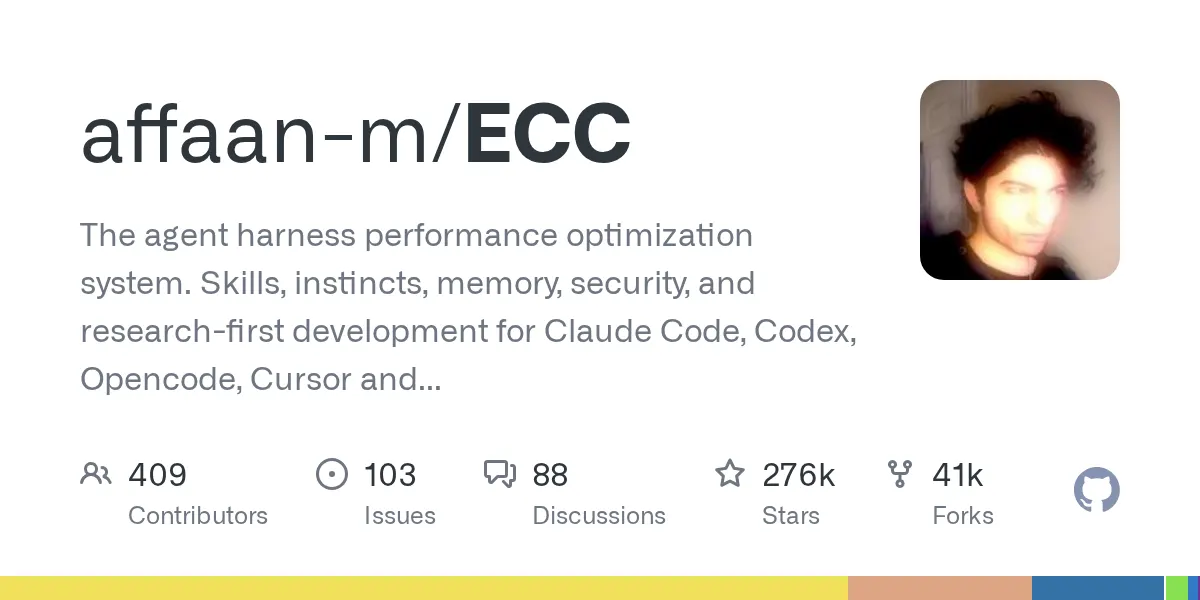
affaan-m/ECC
The agent harness performance optimization system. Skills, instincts, memory, security, and research-first development for Claude Code, Codex, Opencode, Cursor and beyond.

firecrawl/firecrawl
Supercharge your AI agents with data from the web and beyond. Building the library for superintelligence. 🔥

DietrichGebert/ponytail
Makes your AI agent think like the laziest senior dev in the room. The best code is the code you never wrote.

farion1231/cc-switch
A cross-platform desktop All-in-One assistant for Claude Code, Codex, OpenCode, OpenClaw, Grok Build & Hermes Agent. Only official website: ccswitch.io

Graphify-Labs/graphify
Turn any codebase, with its docs, SQL schemas, configs, and PDFs, into a queryable knowledge graph. A /graphify skill for Claude Code, Cursor, Codex, and Gemini CLI: local deterministic AST parsing, every edge explained, no vector store.